
The Roof Check Every Homeowner Should Know

A five-minute roof check from the ground can help you spot small problems before they become costly repairs.
Your Roof Protects Everything Under It
Your roof works every day, yet it's one of the most overlooked parts of your home. Most homeowners don't think about it until they discover a ceiling stain or a leak after a storm.
The good news is that many roofing problems give warning signs long before water enters your home. Better yet, you don't need to climb onto the roof to spot them.
This simple five-minute roof check will help you recognize what looks normal, what deserves a closer look, and when it's time to call a roofing professional.
Safety First: Never walk on your roof to perform this inspection. A pair of binoculars or your phone's zoom camera is all you need.
Step 1: Look at Your Roof from a Distance
Stand where you can see as much of your roof as possible. For many homes, that's across the street. If that's not possible, the end of your driveway usually works well.
Before looking at individual shingles or tiles, look at the entire roof.
Ask yourself one question:
"Does anything look different from the rest?"
A healthy roof usually looks like this:
The roofline is straight.
The surface looks even.
The color is generally consistent.
Nothing immediately catches your attention.
Warning signs to watch for:
A section of the roof appears lower than the rest.
One area looks dramatically different in color.
A portion of the roof appears uneven or wavy.
Anything simply looks "out of place."
Homeowner Tip: Take one photo of your roof from the same location every year. Comparing photos is one of the easiest ways to spot gradual changes.
Step 2: Know What to Look For on Your Type of Roof
Different roofing materials age differently. Here's what to look for on the most common roof types found throughout Northern California.
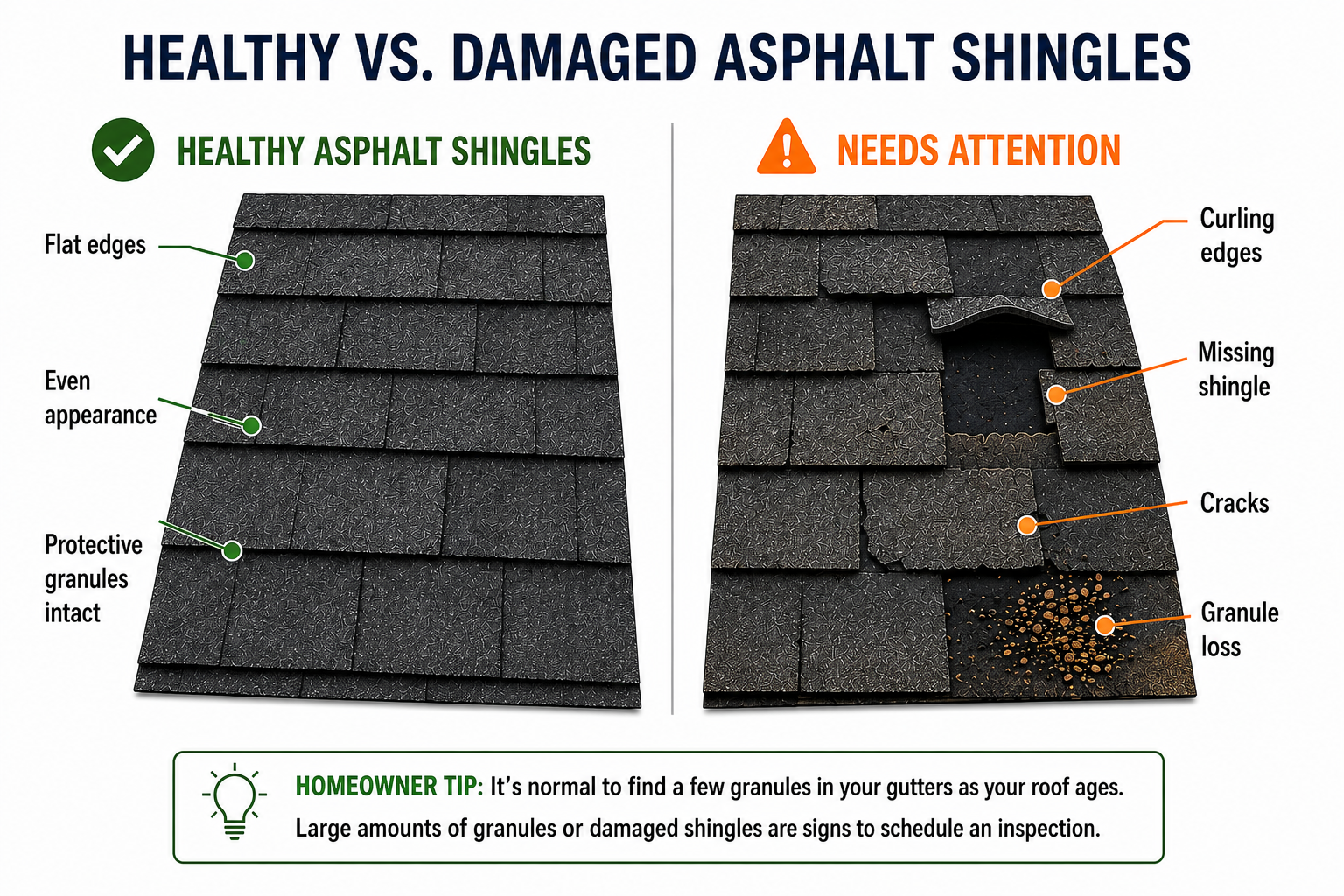
Asphalt Shingles
This is the most common roofing material on Northern California homes.
Normal
Shingles lie flat.
Color is fairly even.
A small amount of granules may collect in gutters as the roof ages.
Look More Closely If You See:
Shingles curling along the edges.
Missing shingles.
Cracks running through shingles.
Dark patches where protective granules are gone.
A few granules in the gutter are usually normal. Large amounts of granules or several damaged shingles deserve a professional inspection.
Architectural Shingles
Architectural shingles are thicker than traditional three-tab shingles and often last longer.
Look for:
Raised edges.
Missing sections.
Areas that appear lifted after heavy winds.
Exposed fiberglass backing.
Clay or Concrete Tile Roofs
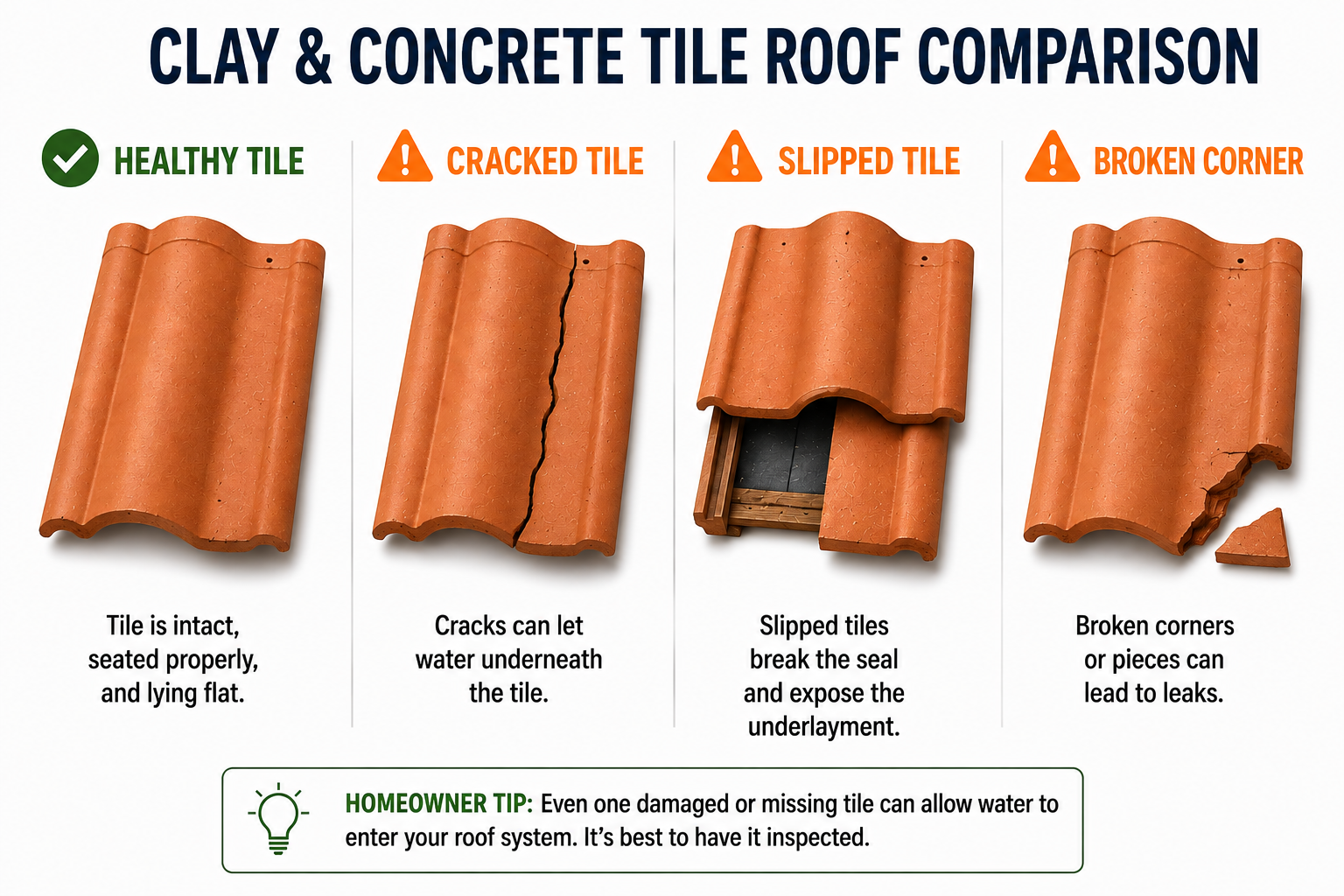
Tile roofs can last for decades, but individual tiles can crack or move over time.
Normal
Slight color variations.
Minor weathering.
Warning Signs
Cracked tiles.
Tiles that have slipped out of place.
Missing pieces.
Broken corners.
Did You Know? One cracked tile can allow water beneath the roofing system even though the rest of the roof appears to be in excellent condition.
Slate Roofs
Slate is extremely durable but can be damaged by impact or improper foot traffic.
Look for:
Missing slate pieces.
Cracked corners.
Pieces that appear to have shifted.
Never walk on a slate roof unless you're trained to do so.
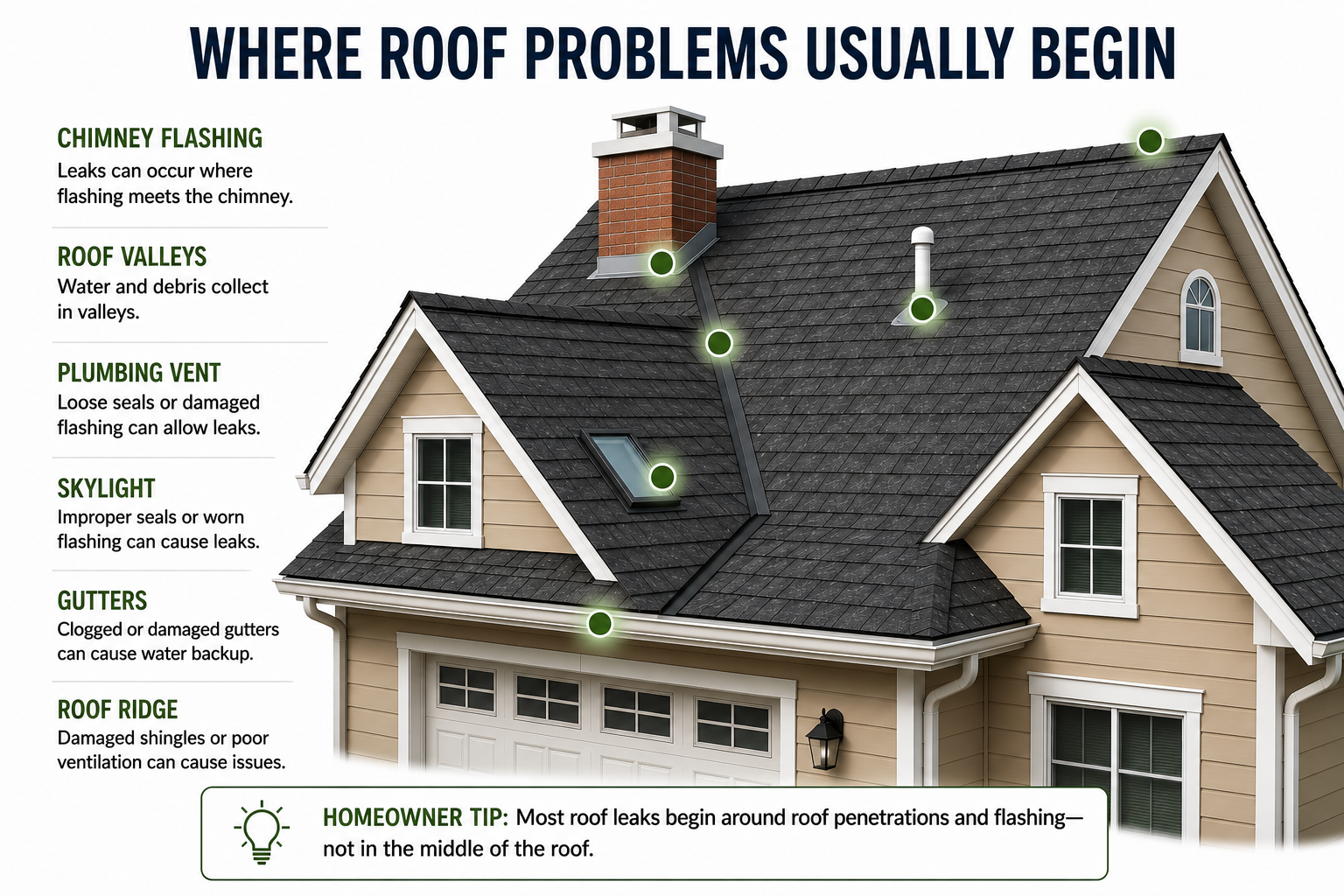
Step 3: Check the Areas Where Roof Problems Usually Begin
Many homeowners assume roof leaks start in the middle of the roof.
In reality, they often begin where two materials meet or where something passes through the roof.
Take a minute to check these areas.
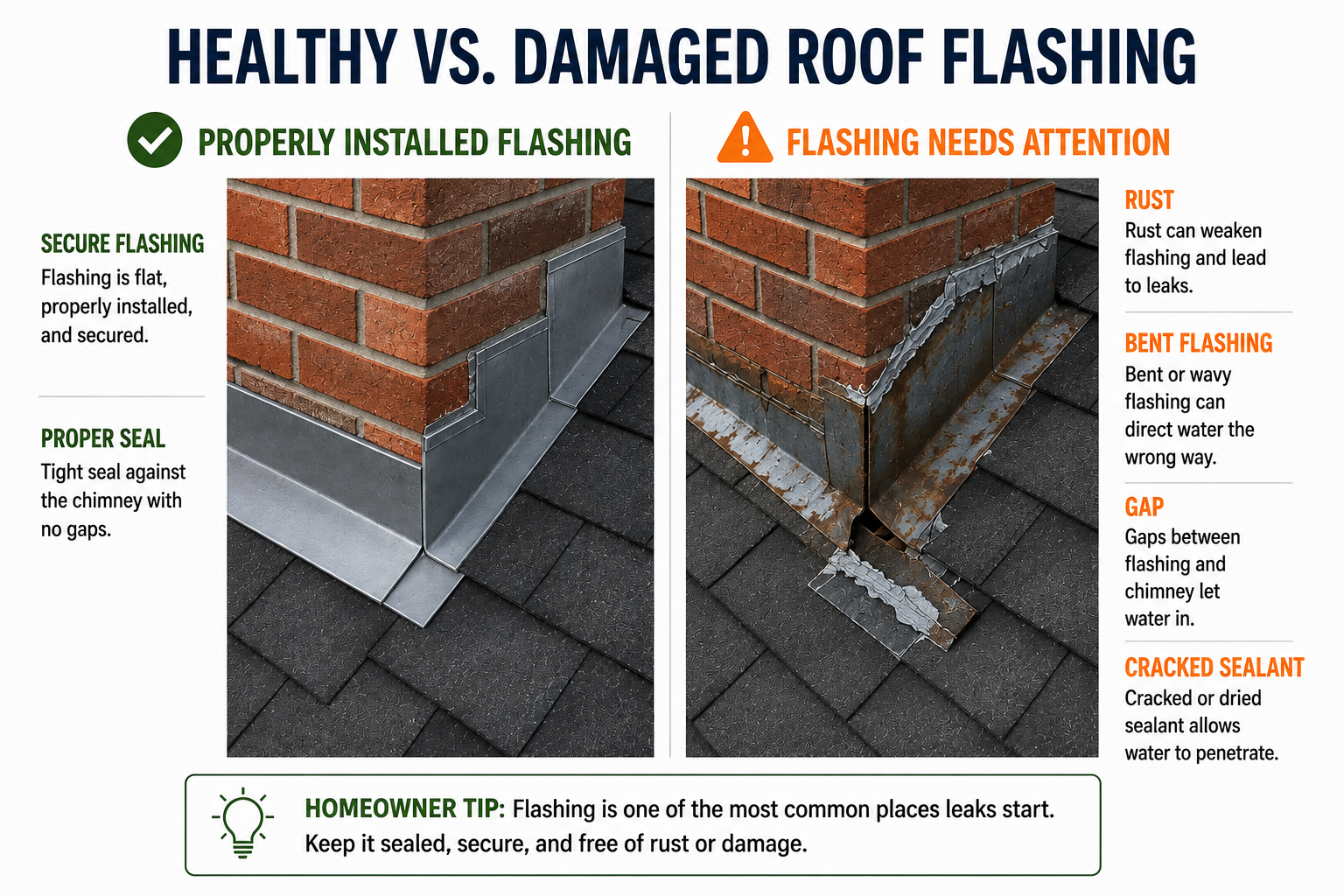
Chimneys
Look at the metal flashing where the chimney meets the roof.
Watch for:
Rust.
Gaps.
Bent metal.
Loose sealant.
Roof Valleys
Roof valleys carry a tremendous amount of rainwater.
Look for:
Leaves.
Pine needles.
Branches.
Debris that could prevent water from flowing freely.
Gutters
While you're looking up, check your gutters.
Watch for:
Gutters pulling away from the house.
Plants growing inside.
Overflow stains.
Sections that appear to sag.
Trees
Branches that touch your roof during windy weather can slowly wear away roofing materials.
If a branch regularly rubs the roof, it's a good idea to have it trimmed.
Step 4: Take One Minute to Look Inside
Sometimes your home tells you there's a roofing problem before your roof does.
If you have attic access, use a flashlight to look around.
If you don't, simply look at the ceilings in the rooms beneath your roof.
Watch for:
Brown water stains.
Damp insulation.
Mold.
Musty odors.
Daylight shining through the roof where it shouldn't.
Even if a stain appears dry, don't ignore it. It may only leak during heavy storms.
Can You Handle This Yourself?
Most homeowners can safely:
Inspect the roof from the ground.
Take photos of anything unusual.
Remove small branches from the yard.
Keep gutters free of leaves and debris.
Leave roof repairs and climbing to trained professionals with the proper safety equipment.
When to Call a Roofing Professional
Schedule an inspection if you notice:
Missing shingles or tiles.
Cracked or slipped tiles.
A sagging roofline.
Water stains inside your home.
Moss covering large sections of the roof.
Gutters pulling away from the house.
Anything that concerns you after completing this inspection.
Many roofing problems are relatively inexpensive to repair when they're caught early. Waiting until water enters your home often leads to much larger—and more expensive—repairs.
Your Five-Minute Challenge
Before this weekend is over, spend five minutes walking around your home.
Take one photo of your roof from each side of the house.
If everything looks normal, you've gained peace of mind.
If something doesn't look right, save the photo and contact a qualified roofing professional. Having a picture of the issue can also make it easier to explain what you've noticed.
✓ Homeowner Check Complete
Time invested: About 10 minutes
Today you learned how to:
Safely inspect your roof from the ground.
Recognize common warning signs on several roofing materials.
Identify areas where roof problems often begin.
Know when it's time to call a roofing professional.
A few minutes spent looking at your roof today could help you avoid a much larger repair tomorrow.
About This Homeowner Guide
This article is intended for homeowner education and does not replace a professional inspection.
Have More Questions?
Here are a few trusted resources to help you learn more about roof maintenance, inspections, repairs, and protecting your home.
National Roofing Contractors Association (NRCA) – Homeowner guidance on roof inspections, maintenance, repairs, weather damage, warranties, and selecting a qualified roofing contractor.
NRCA Consumer ResourcesNational Roofing Contractors Association – Consumer Information – Easy-to-understand information about roofing materials, choosing a contractor, and common homeowner questions.
NRCA Consumer InformationInsurance Institute for Business & Home Safety (IBHS) – Practical advice on protecting your home from wind, hail, wildfire, and other severe weather, including roof performance.
IBHS Homeowner ResourcesU.S. Department of Energy – Energy Saver – Learn how proper attic ventilation, insulation, and air sealing work together to improve your home's comfort and energy efficiency.
DOE Energy SaverFederal Emergency Management Agency (FEMA) – Guidance on preparing your home for severe weather, recovering after storms, and reducing future damage.
FEMA Ready for Disasters