
Repair or Replace? How to Make the Right Call on Your Roof
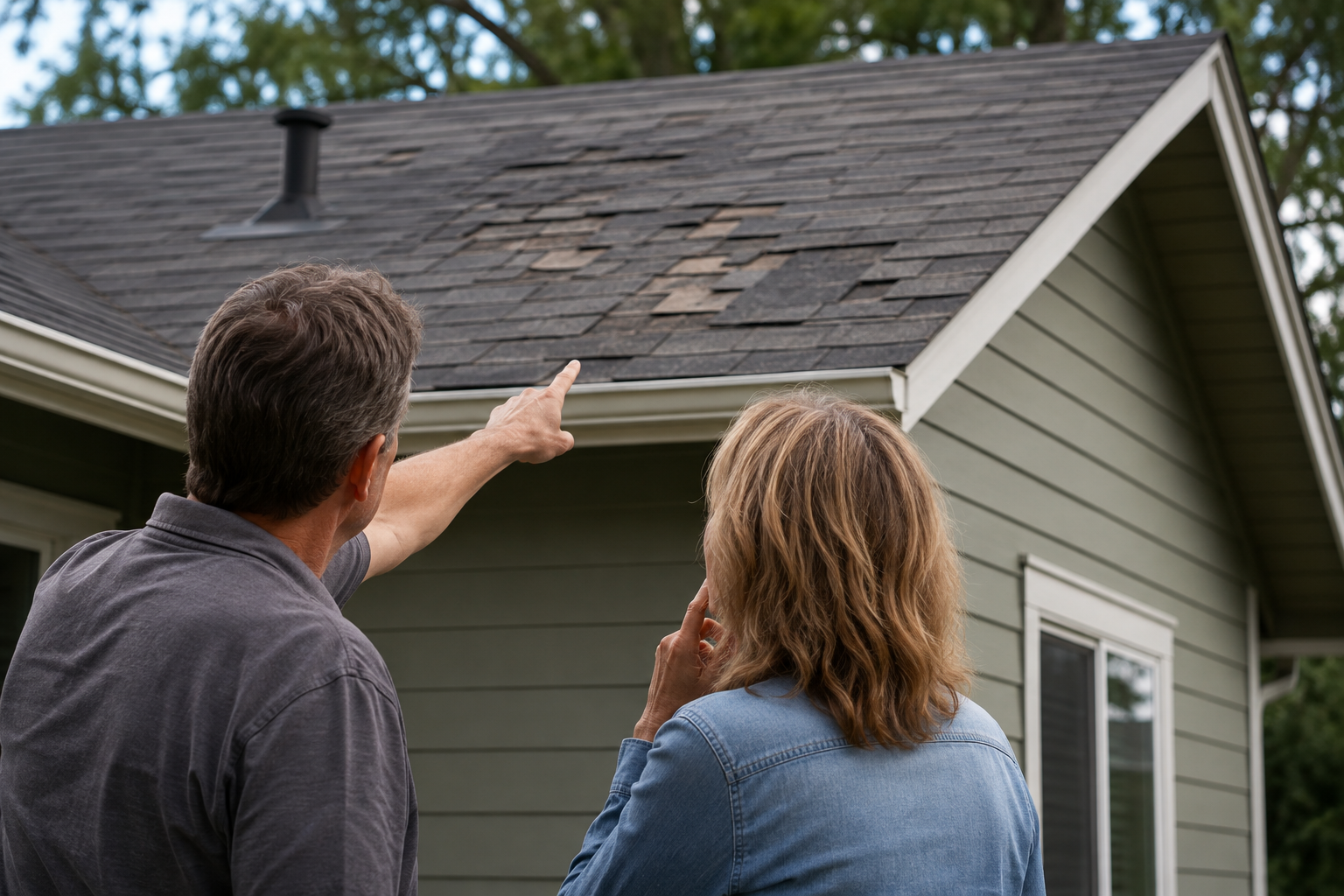
A damaged area doesn't always mean the entire roof needs replacing. The condition of the rest of the roofing system matters.
Northern California Homeowner Decision Guide
The right answer isn't simply about how much a repair costs today. It's about the condition of the entire roof, how much useful life it has left, and what makes sense for your home.
A roof problem doesn't automatically mean you need a new roof.
A missing shingle, cracked tile, damaged flashing, or small leak may be relatively straightforward to repair. But when problems become widespread—or keep coming back—another repair can sometimes mean spending money on a roof that's already nearing the end of its useful life.
So how do you decide?
The goal isn't to find a universal rule for when to repair or replace a roof. There isn't one. Instead, there are several questions that can help you understand which option deserves serious consideration.
Start With the Problem: Is It Isolated or Widespread?
This is one of the most useful distinctions a homeowner can make.
Imagine a windstorm damages a small section of an otherwise healthy asphalt-shingle roof. That's very different from discovering curled, cracked, or deteriorated shingles across several roof slopes.
The same principle applies to tile.
One or two broken concrete or clay tiles don't necessarily indicate a failing roof. Numerous cracked or displaced tiles, deteriorated components beneath them, or recurring leaks tell a different story.
Ask yourself:
Is the problem limited to one small area?
Does the rest of the roof appear to be in good condition?
Is this the first problem you've experienced?
Or are problems beginning to appear in several locations?
An isolated problem may point toward repair. Widespread deterioration makes the condition of the entire roofing system more important to the decision.
Next, Consider the Roof's Age
Age doesn't determine the answer by itself, but it provides important context.
Roofing materials have different expected lifespans, and actual service life varies considerably based on material quality, installation, maintenance, sun exposure, weather, ventilation, and the home's specific conditions.
That's why simply asking, "How old is my roof?" isn't enough.
A better question is:
How much useful life might the rest of my roof have?
If a relatively young roof has one repairable problem, fixing that problem may preserve many years of useful service.
If an older roof is experiencing repeated problems and other components are also deteriorating, repairing one area may solve today's problem without changing the larger picture.
Homeowner Tip: If you don't know the age of your roof, look through home-purchase documents, previous invoices, permit records, or ask a roofing professional whether the materials provide clues about its approximate age.
Understand What's Actually Failing
Not every roof leak means the roofing material itself has failed.
Water frequently finds its way into homes around:
Flashing
Roof penetrations
Plumbing vents
Skylights
Chimneys
Valleys
Damaged individual shingles or tiles
If the primary roofing material remains healthy, repairing one of these components can be very different from repairing a roof whose surface is deteriorating throughout.
There's another layer homeowners sometimes don't see: the materials underneath the visible roof.
For example, tile roofs can remain visually attractive even when the underlayment beneath the tiles has aged or deteriorated. Water intrusion can also damage the wood roof decking beneath asphalt shingles or other roofing materials.
This is why a professional roof evaluation can become important once you've identified a problem. You're not only trying to determine where water entered. You're trying to understand why it entered and what condition the surrounding roofing system is in.
Your Roofing Material Changes the Equation
Different roofs need to be evaluated differently.
Asphalt Shingles
An isolated missing or damaged shingle may be repairable when the surrounding shingles remain flexible and in good condition.
The decision becomes more complicated when you see deterioration across large areas, such as widespread curling, cracking, granule loss, or repeated shingle failures.
Matching an older roof can also become difficult because replacement shingles may differ in color or appearance from weathered originals.
Clay and Concrete Tile
A few damaged tiles can often be very different from a failing roofing system.
The visible tiles may have considerable life remaining, while the underlayment, flashing, or other components beneath them require attention.
Don't assume that a cracked tile means the entire roof needs replacement—or that good-looking tiles mean everything underneath them is fine.
Metal Roofing
Individual issues involving fasteners, sealants, flashing, or localized damage don't necessarily mean the metal panels themselves need replacement.
Widespread corrosion, failing seams, recurring leaks, or problems involving the underlying roof assembly deserve a broader evaluation.
The key across all three materials is the same:
Don't judge the entire roof by one damaged component—and don't judge one damaged component without considering the condition of the entire roof.
Repair Cost Isn't the Only Cost That Matters
Suppose you have two choices:
Repair the roof now.
Or replace it.
The repair will almost always look less expensive when viewed as a single transaction. But that doesn't automatically make it the less expensive decision over time.
Consider:
How much useful life might the repair preserve?
Have you already paid for other repairs recently?
Are additional repairs becoming increasingly likely?
Would today's repair need to be removed or redone during a replacement in the near future?
This isn't an argument for replacement.
It's an argument for looking beyond today's invoice.
A meaningful repair that gives an otherwise healthy roof years of additional service can represent excellent value. Repeated repairs to different sections of a deteriorating roof may tell you something very different.
Think About How Long You Plan to Own the Home
Your plans matter.
A homeowner expecting to stay for another 15 or 20 years may evaluate longevity, maintenance, energy performance, appearance, and future roofing costs differently from someone expecting to move within several years.
Resale also deserves consideration—but don't assume a new roof automatically produces a dollar-for-dollar increase in home value.
Instead, think about the practical question:
Will the condition of this roof become an issue I need to address while I own this home?
Your answer may help determine how you think about a short-term repair versus a longer-term solution.
Northern California Conditions Matter
There isn't one roofing climate across Northern California.
Homes in the East Bay, North Bay, Sacramento region, and Silicon Valley can experience very different combinations of summer heat, intense sun, winter rain, wind, tree debris, moisture, and wildfire exposure.
Even two sides of the same roof can age differently.
A south- or west-facing asphalt roof may receive considerably more afternoon sun. A roof shaded by mature trees may experience more debris and moisture. Homes in areas exposed to seasonal winds may experience different stresses than more sheltered properties.
That's another reason generic age formulas shouldn't make the decision for you.
The actual condition of your roof matters more than a number on a calendar.
Questions to Ask Yourself Before Deciding
Before thinking about repair versus replacement, write down what you already know.
Ask yourself:
How old is the roof?
What roofing material do I have?
Is the current problem isolated or widespread?
Is this my first roof repair?
Have similar problems happened before?
Does the rest of the roof appear healthy?
Is water getting inside the home?
Is the problem the roofing material or another component?
How long do I expect to own this home?
What matters most to me: lowest immediate cost, longer-term reliability, appearance, lower maintenance, or something else?
You don't need to know every answer yet.
The purpose is to identify which answers you need before making the decision.
Common Mistakes to Avoid
Assuming a leak means you need a new roof.
Some leaks originate from localized problems that can be repaired.
Assuming a repair is automatically the better value.
A lower price today doesn't tell you how much useful life the repair buys.
Making the decision based only on roof age.
Age is useful context, not a diagnosis.
Looking only at what's visible.
Underlayment, decking, flashing, and other components can materially change the decision.
Waiting for interior damage to get worse.
Whether the ultimate answer is repair or replacement, active water intrusion deserves prompt attention.
Before You Make Your Decision
Use this quick self-check:
✓ Do I understand what's actually causing the problem?
✓ Do I know whether the issue is isolated or widespread?
✓ Do I know the approximate age and overall condition of my roof?
✓ Have I considered the condition of components beneath or around the roofing material?
✓ Do I understand how much useful life a repair might realistically preserve?
✓ Have I considered whether repairs are becoming a pattern?
✓ Have I thought about how long I plan to own the home?
✓ Am I evaluating long-term value as well as today's cost?
If several of those answers are still "I don't know," that's useful information.
Those are the questions you want answered before deciding.
✓ Homeowner Decision Guide Complete
Today you learned how to:
Distinguish an isolated roofing problem from broader deterioration.
Consider roof age without relying on age alone.
Understand why the visible roofing material isn't always the source of the problem.
Evaluate repair cost in the context of remaining roof life.
Factor your ownership plans and priorities into the decision.
Identify the information you still need before choosing repair or replacement.
There isn't a universal answer to repair or replace.
There is an informed answer for your roof, your home, and your plans.
Have More Questions?
Here are several trusted resources that can help you continue your research:
National Roofing Contractors Association (NRCA) — Consumer Resources: Homeowner education about roofing systems, maintenance, repairs, materials, and working with roofing professionals.
Insurance Institute for Business & Home Safety (IBHS): Research and homeowner guidance on roof performance and protecting homes from wind, wildfire, hail, and other severe weather.
U.S. Department of Energy — Energy Saver: Information about roofing, attic insulation, ventilation, energy efficiency, and how different parts of the home's building envelope work together.
California Contractors State License Board (CSLB): Consumer information about licensed contractors and preparing for home improvement projects.
About This Homeowner Decision Guide
This guide is intended for general homeowner education. Every roof and home is different. A qualified roofing professional can evaluate conditions that cannot safely or reliably be assessed from the ground and provide recommendations specific to your home.