
A winter power outage can turn a small inconvenience into an expensive mistake—especially if you buy a backup system that cannot run the appliances you actually need. In the East Bay, North Bay, Silicon Valley and Sacramento region, outages may follow wind, heavy rain, equipment problems or planned safety shutoffs.
The right purchase depends less on a flashy product label than on seven practical answers.
1. What absolutely must stay on?
Make a short essentials list before shopping: refrigerator, internet equipment, phone charging, a few lights, a garage door release, and any medical device that needs electricity. Separate those from high-draw comforts such as an electric oven, central air conditioning or electric resistance heat. If you use powered medical equipment, build a separate emergency plan with your care team; a consumer backup system should not be your only safeguard.
2. How many watts—and for how long?
Check the appliance label or manual for running watts and, where relevant, startup surge. Multiply watts by hours to estimate energy. A 15-watt router running eight hours uses about 120 watt-hours (Wh); a 10-watt LED lamp for eight hours uses 80 Wh. Add all loads, then allow for conversion losses and reserve capacity. A portable battery labeled 1,000 Wh will not necessarily deliver 1,000 Wh to your outlets. A refrigerator’s compressor may demand a brief surge beyond its steady running wattage.
3. Is your outage plan measured in hours or days?
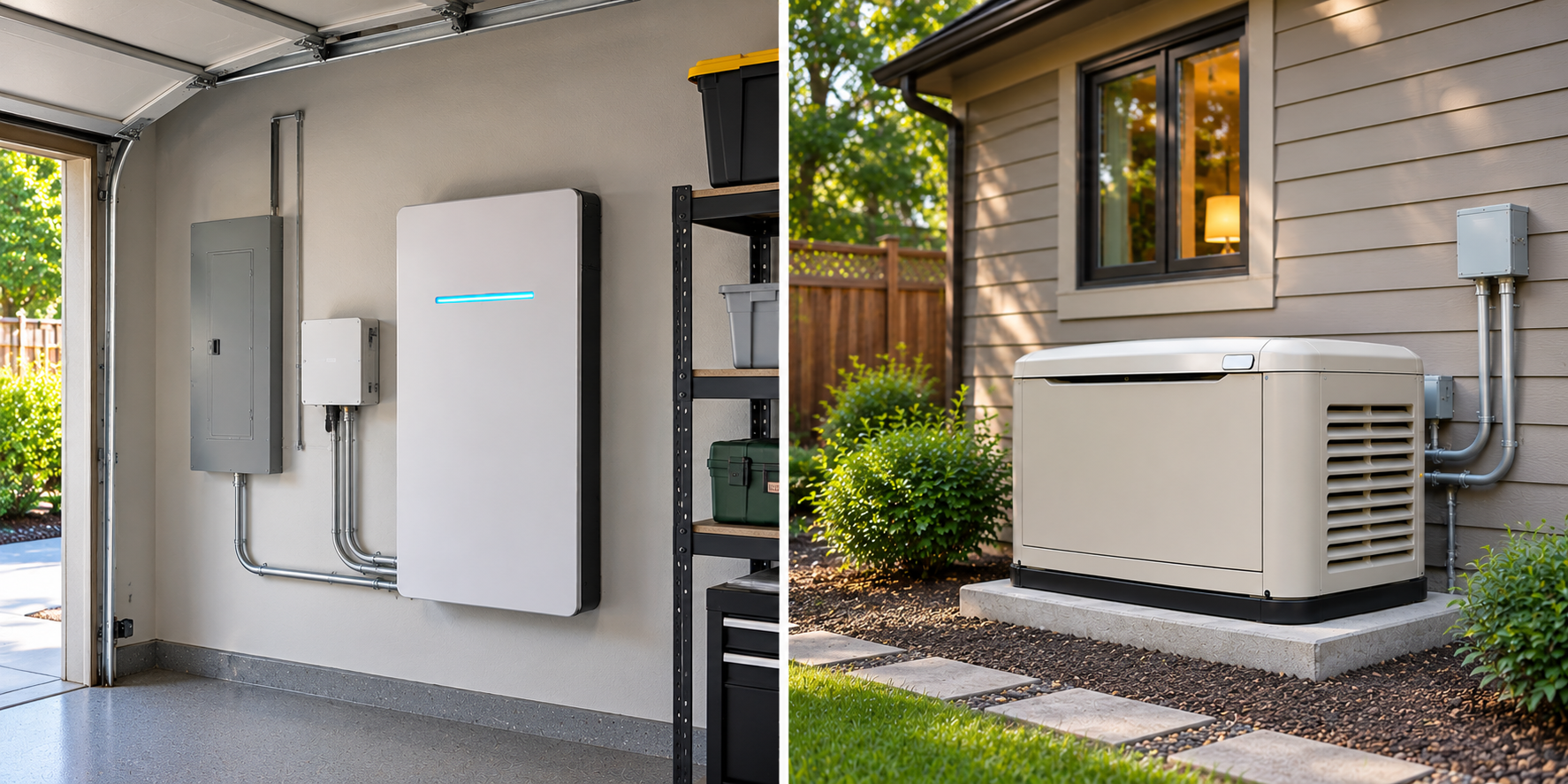
A portable power station is quiet and convenient for electronics and some small appliances, but its runtime is finite. A fuel-powered portable generator can run longer when fuel is available and it is operated safely; it also requires refueling, maintenance and suitable outdoor placement. A professionally installed home battery or standby generator is a different project, with wiring, permitting and a much larger installed cost. Ask each seller to demonstrate runtime at your actual load, not at a best-case marketing load.
4. Can you operate it safely at your property?
Never run a gasoline or propane generator inside a house, garage, carport or partially enclosed area. The CDC advises placing it outdoors at least 20 feet from doors, windows and vents, with exhaust directed away. Use working carbon-monoxide alarms. Never plug a generator into a wall outlet to feed the house: that dangerous backfeed can injure utility workers. A qualified electrician should design any permitted transfer-switch or other approved connection. Follow the manufacturer’s instructions for battery placement, ventilation, charging and weather protection.
5. What does the complete price include?
Compare the equipment, safe installation, transfer equipment if needed, permits, fuel storage, periodic servicing, battery replacement expectations and warranties. A low shelf price can become a high installed price. Request a written quote identifying which circuits or appliances will actually operate, whether the system switches automatically, and who handles inspection. Do not buy an oversized system just because it is advertised as “whole home.”
6. Are you eligible for a utility program?
Some PG&E customers in qualifying high-fire-risk areas or on designated circuits may qualify for generator or battery support. PG&E’s posted generator-and-battery rebate is up to $300 for eligible accounts, with a possible additional amount for certain assistance-program customers; equipment and timing restrictions apply, and the current program lists a December 31, 2026 outer application deadline. That is not a blanket rebate for all Northern California homeowners. Check your specific utility and address before making the purchase; Sacramento-area customers may have different programs.
7. Can you test the plan before the lights go out?
Run a safe rehearsal: charge the battery, confirm cables fit, identify which devices are essential, check generator maintenance and fuel storage, and make sure everyone knows where flashlights and instructions live. Keep your refrigerator and freezer closed during an outage. If your system requires a transfer switch, have the installer demonstrate the procedure. Your final buying question should be: “Can this exact setup keep my three most important things working for the hours I need?”
Take a one-page comparison sheet to every quote: list the three loads you cannot lose, their running and startup watts, your target hours, the safe connection method, and the total cost after installation. Ask whether a portable battery can be recharged during an extended outage and how long that takes; solar panels are not a guaranteed refill on a cloudy winter day. Ask a generator installer where the unit will sit outdoors and how it will be kept away from doors, windows and vents. If a vendor cannot answer those questions in writing, keep shopping. Your goal is a workable plan, not a product with the largest number on its box.
THE DECISION: Start with an essentials-and-runtime worksheet, then compare two solutions on delivered power, safe operation and total installed cost. Buying less than you need wastes money; buying more than you can safely use does too.
Additional Resources
• PG&E — Backup Power Safety: https://www.pge.com/en/outages-and-safety/safety/electric-safety/backup-power-safety.html
• PG&E — Generator & Battery Rebate Program (eligibility and deadlines): https://www.pge.com/en/outages-and-safety/outage-preparedness-and-support/general-outage-resources/generator-and-battery-rebate-program.html
• CDC — Carbon Monoxide Poisoning Basics: https://www.cdc.gov/carbon-monoxide/about/index.html
• FEMA / Ready.gov — Power Outage Hazard Information: https://www.ready.gov/sites/default/files/2024-03/ready.gov_power-outage_hazard-info-sheet.pdf
• Consumer Reports — Generator Buying Guide: https://www.consumerreports.org/home-garden/generators/buying-guide/
