
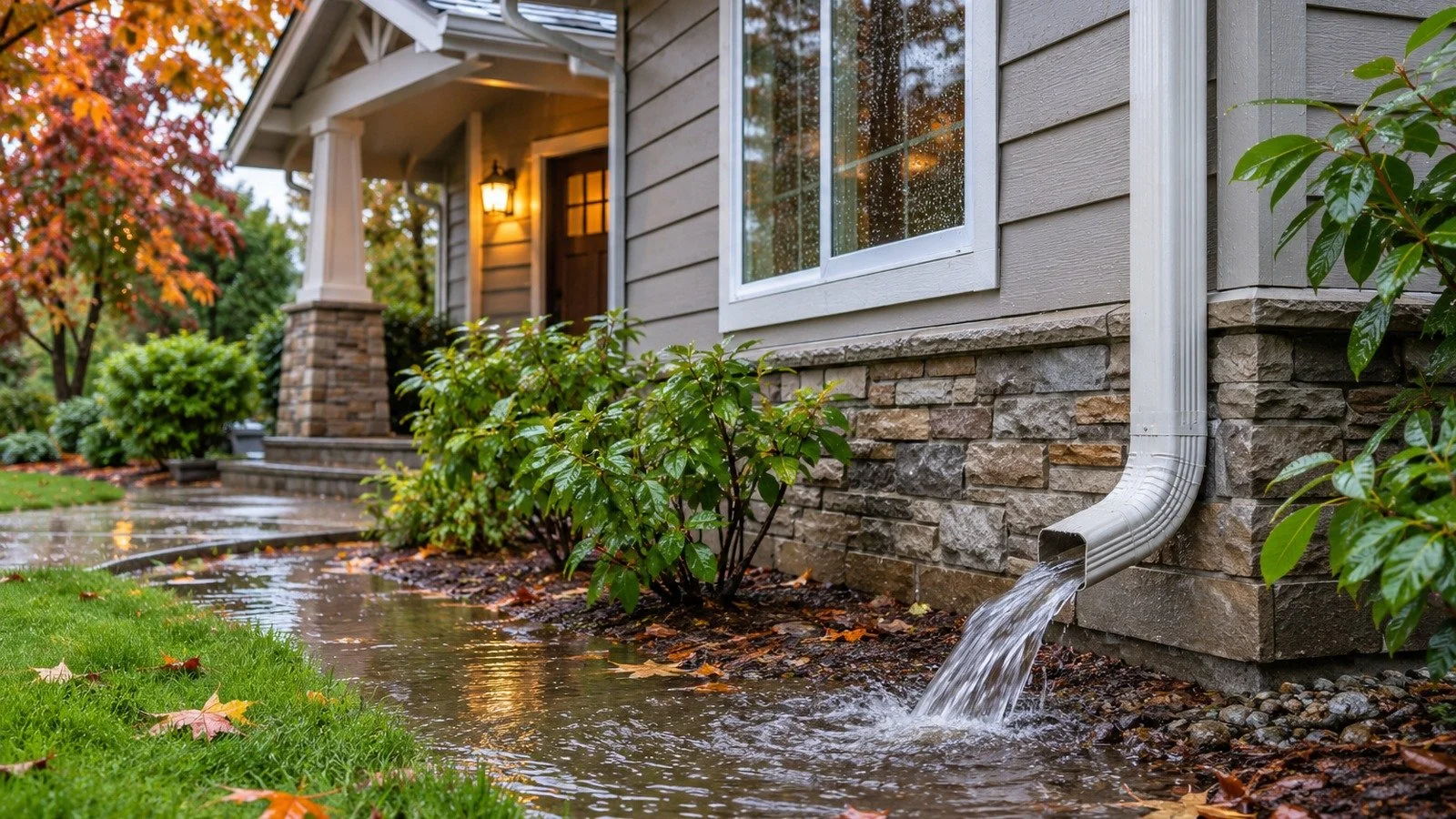
November Bay Area storms bring heavy rain, outages and reports of local flooding. For homeowners across the East Bay, North Bay, Sacramento and Silicon Valley, the immediate question is not simply what got wet, but what actually needs repairing. Coastal exposure, hillside runoff, aging drainage and low-lying lots create different risks from one neighborhood to the next. The following decision guide helps you triage the situation without assuming every symptom calls for an expensive replacement.
The first decision is safety
A storm can expose a problem without telling you what caused it. Before inspecting, stay clear of standing or moving floodwater, downed lines, sagging ceilings, unstable trees and any wet electrical equipment. Do not enter a flooded area of the house until it has been judged safe. If water has reached outlets, panels or appliances, have a qualified electrician assess them before restoring power. An urgent safety problem deserves an urgent professional response; a cosmetic stain does not automatically justify a major replacement.
Document the evidence before buying a solution
Photograph the location, extent and timing of the problem from a safe position. Note whether water appeared during the heaviest rain, after the storm stopped, or only when a fixture ran. Record where it traveled: from the roofline, around a window, beneath a door, across the yard, or up through a drain. A short timeline, photos and any earlier repair invoices can help a contractor distinguish a one-time overflow from a recurring defect. Save receipts for emergency protection and mitigation.
Ask where the water actually came from
A wet ceiling does not always mean the roof needs replacing. Water can travel along framing before appearing indoors. An overflowing gutter may be blocked, undersized, pitched incorrectly or overwhelmed by a concentrated roof valley. A damp crawlspace may reflect grading, drainage or plumbing. Ask the contractor to show the suspected entry point, the evidence supporting the diagnosis, and whether a targeted repair can be tested before approving a full system replacement.
Read the regional clues
Before the next atmospheric river, check accessible ground-level downspout outlets, surface drains and the route runoff takes toward streets or neighboring property. In waterfront areas, high tides may limit drainage even when gutters are clear. In foothill and burn-scar areas, fast runoff can arrive with little warning. These are reasons to seek a site-specific assessment, not reasons to purchase a particular product.
Separate the immediate fix from the permanent fix
There are often two scopes: stop additional damage now, then correct the underlying condition. Emergency work may involve safe temporary protection, water extraction or drying. The permanent solution could be a gutter correction, a flashing repair, drainage improvements or more substantial reconstruction. Request those scopes and prices separately. That helps you avoid committing to a large job under pressure while still addressing genuine risks promptly.
Compare proposals that describe the same result
A low bid and a high bid may not cover the same work. Ask each qualified contractor to specify diagnosis, measurements, materials, removal and disposal, access, permits where applicable, drying or moisture testing, warranties, schedule and exclusions. If one proposes replacement and another proposes repair, ask what evidence would change each recommendation. A written, comparable scope is more useful than a price alone.
Know when the decision cannot wait
Active water entering a living area, damaged electrical equipment, structural movement, sewage contamination or unsafe trees can require immediate action. Moisture also needs prompt attention: EPA guidance advises drying wet interiors and materials as quickly as possible, ideally within 24–48 hours when safe. For persistent dampness, hidden damage or contamination, professional remediation may be appropriate. Do not climb onto a wet roof or attempt dangerous snow or tree removal yourself.
Use the next storm as a test—not a surprise
After repairs, ask what observable outcome confirms success: no overflow at a particular downspout, no recurring moisture reading, or water flowing away from the foundation. Keep before-and-after photographs and a simple maintenance record. If the proposed fix is expensive, ask what inspection or measurement can validate the diagnosis before work begins. The goal is not to delay necessary repairs; it is to spend money on the problem you actually have.
The five questions to take into a contractor conversation
What exactly failed, and how do you know? What is the smallest safe fix that addresses the cause? What conditions would justify replacing the entire system instead? Which parts of the work are emergency protection and which are permanent improvements? How will we confirm the problem is resolved? These questions are not a substitute for expert judgment; they help you understand it. Ask the contractor to put the answers in writing. If the explanation changes after work begins, request a documented change order describing why, what it costs and how it affects the schedule. For nonemergency work, give yourself time to compare alternatives.
What Homeowners Should Remember
A storm reveals symptoms, not always causes. Protect people first, document what happened, demand a clear diagnosis, separate emergency stabilization from permanent work, and compare written scopes. A careful decision can be both prompt and cost-conscious.
Additional Resources
EPA — Flooded Home — https://www.epa.gov/emergencies-iaq/flooded-home
National Weather Service — Flood Safety — https://www.weather.gov/tsa/hydro_tadd
California CSLB — Check a Contractor License — https://www.cslb.ca.gov/LicenseCheck
EPA — Flood Cleanup and Indoor Air — https://www.epa.gov/emergencies-iaq/flood-cleanup-protect-indoor-air-and-your-health